SEO/GEO Agency
All articles
SEO
Google I/O 2025: 5 AI Announcements That Will Revolutionize SEO (and How to Prepare)
Google I/O 2025: 5 AI Announcements That Will Revolutionize SEO (and How to Prepare)
News
10 min
Published on Dec 13, 2025
Use AI to summarize this article
Key points
In this article:
Google has announced AI Overviews, AI Mode, and a RAG system to
transform search results globally.
The deployment changes search behavior, favoring expert, documented
content over general news or basic informational sites.
Early European data reveals traffic redistribution, with
hyper-specialized content gaining visibility and general content losing clicks.
Companies must adapt with AI-optimized content, technical structuring,
and new performance metrics to maintain visibility.
Who is this article for?
This article is intended for digital marketers, SEO specialists, content
creators, and web strategists seeking to understand the impact of AI on search engines and adapt
their content strategies to thrive in the new AI-driven search ecosystem.
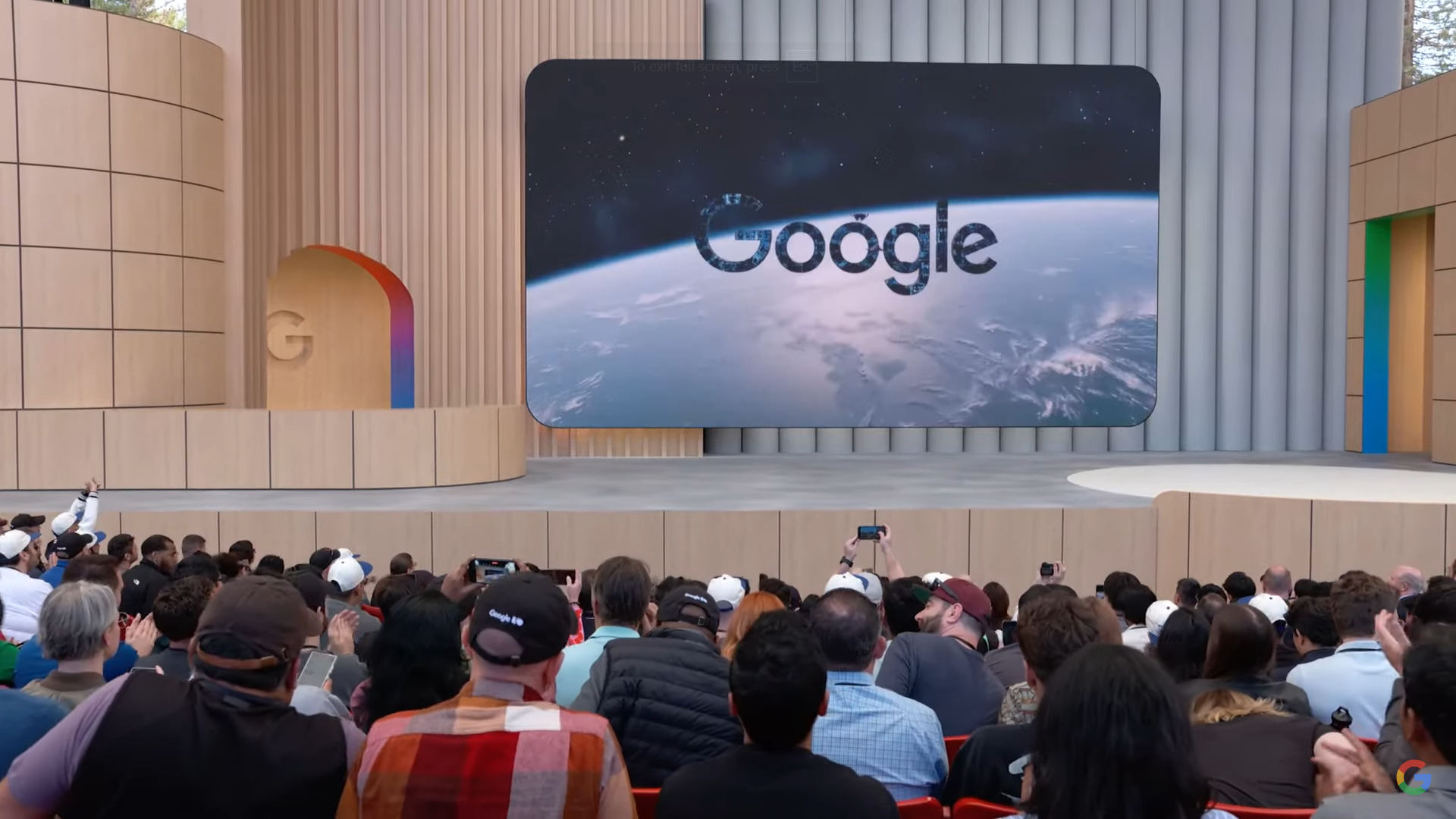
Google AI Search Transformation – May 20, 2025
On May 20, 2025, during its annual Google I/O conference, Google announced the massive deployment of artificial intelligence in its search engine. This marks the end of the
"10 blue links" era that defined web search for 25 years.
Major Announcements
Google introduced three key transformations:
AI Overviews: AI-generated summaries deployed in over 200
countries, reaching 1.5 billion users monthly.
AI Mode: Default search interface in the US, turning Google
into a conversational assistant powered by Gemini 2.5.
RAG System: Answers are composed from multiple sources rather
than simply ranking pages.
Abandoning the "List of Links" Model
Google now composes personalized responses instead of providing 10 links. AI analyzes queries, identifies relevant
info from multiple sites, and generates synthetic answers. Content creators
become information sources rather than final destinations.
AI Content Processing
AI reads web pages like an expert, extracting definitions, data, methodologies. Smaller niche sites can outperform major media if their content is
precise and specialized.
Complex Query Decomposition
Sophisticated queries are automatically split into sub-questions ("query fanout"). AI synthesizes coherent,
personalized answers. Content must now address specific aspects of broader topics to be recognized as reliable
sources.
Google's Strategic Objective
AI aims to keep users on Google by providing direct answers, reducing clicks to external sites. Expert, documented content becomes invaluable for AI responses.
Observed Impact in Europe
Italian data shows general informational sites losing 30-40% traffic, while hyper-specialized content gains 15-45%.
Click-through rates drop, but remaining clicks are higher quality.
Winners and Losers by Sector
Generalized content (news, basic definitions) loses visibility. Specialized consulting, proprietary methodologies,
and detailed case studies gain prominence. Experts become key sources for
AI.
Two Probable Evolution Scenarios
Scenario 1: Controlled Transition – gradual global deployment; moderate traffic drops (15-25%),
existing web ecosystem partially preserved, allowing businesses time to adapt.
Scenario 2: Disruptive Acceleration – rapid worldwide adoption; massive traffic decline (40-60%),
creating opportunities for agile players, while advertising budgets shift toward AI-driven formats.
Adaptation Strategies
Assess vulnerability by content type, SEO dependence, and documented expertise. Transform content to answer specific
questions with context, definitions, and examples. Technical optimization includes Schema.org, QA tags, llms.txt, and semantic structuring.
New Metrics
Traditional SEO metrics are insufficient. Focus on AI citation frequency,
residual traffic quality, and thematic authority.
User Behavior Evolution
Queries become longer, conversational, and highly specific. Interactivity and follow-up questions require content
architecture that allows progressive deep dives. GEO (Generative Engine Optimization) complements SEO.
Content Creation Implications
Depth over breadth, anticipate follow-ups, continuously update content. AI favors sources with documented expertise, precise data, and methodologies.
Conclusion – Global Market Opportunity
Temporary phased rollout worldwide provides a unique opportunity to observe and prepare. Companies that develop
adapted strategies, test approaches, and strengthen documented
expertise
gain a competitive advantage. Expertise, thematic depth, and authentic added
value are rewarded.
FAQ – AI Impact on SEO
How do I know if my site is impacted? Depends on content type; general info sites are more
vulnerable. Test topics on ChatGPT or Claude.
Should I abandon SEO for GEO? No; SEO and GEO are complementary. A hybrid strategy works
best.
How to measure performance? Track AI citations, residual traffic quality, and thematic
authority. Raw traffic is less relevant.
What content is favored? Content with documented expertise, sources, precise methods, and
case studies.








.jpg)
